How to Recognise AI-Generated Phishing Emails in 2026
“Look for bad spelling” is no longer enough to protect a business from phishing.
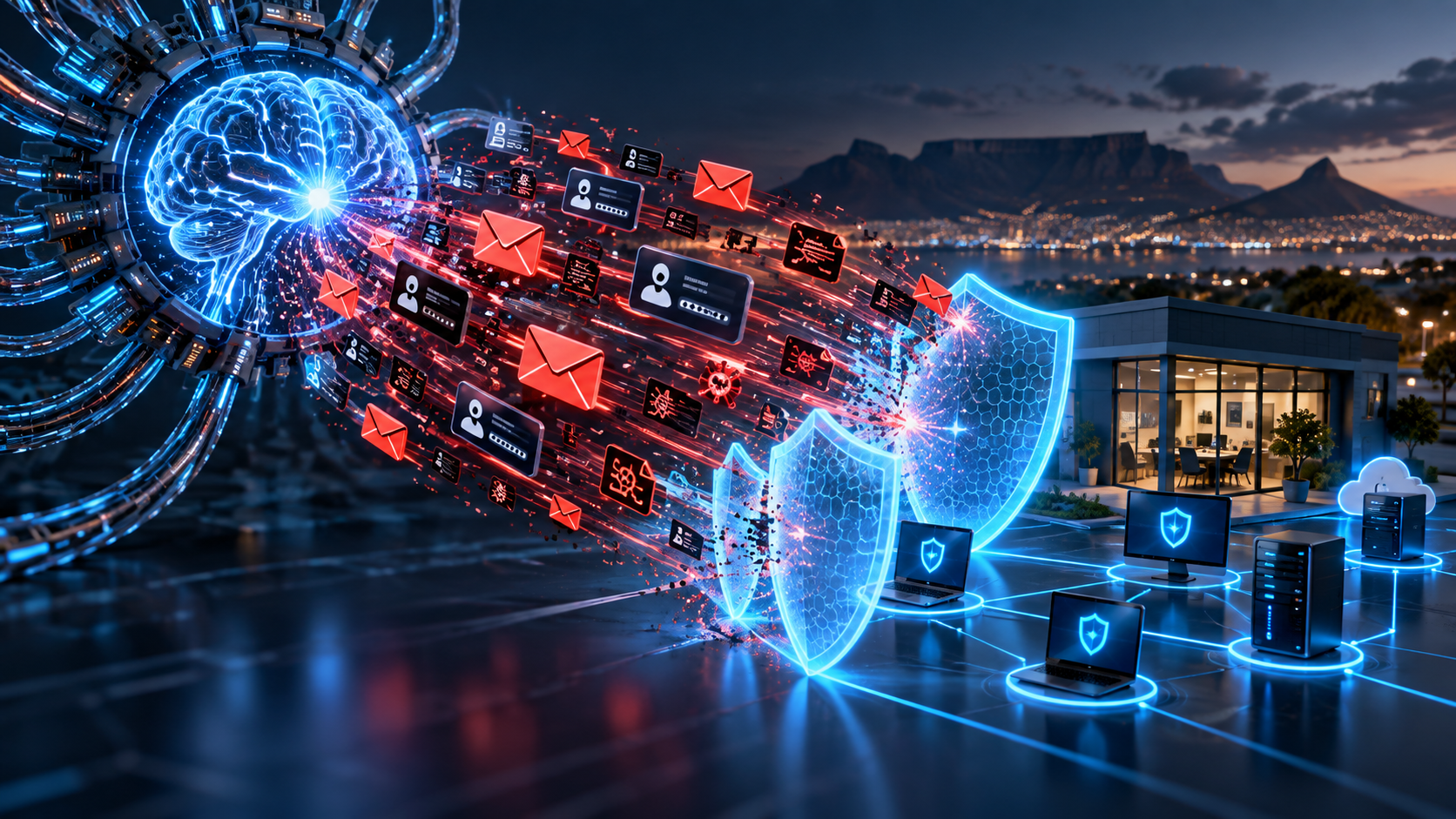
Generative AI can produce professional emails with correct grammar, convincing formatting and a tone that sounds like a supplier, manager or colleague. Criminals can combine AI with information from websites, LinkedIn profiles, data breaches and previous email compromises to create highly believable messages.
INTERPOL’s 2026 African Cyberthreat Assessment says artificial intelligence is enabling cybercrime across Africa to become faster, more scalable and increasingly sophisticated.
Employees therefore need to judge an email by its request and context—not simply by how well it is written.
AI makes personalisation easier
A criminal can quickly gather names, job titles, suppliers and current projects from public sources. AI can then turn that information into a message aimed at one specific employee.
For example, an accounts user may receive a message appearing to come from a known supplier, explaining that its banking details have changed. A manager may receive a realistic Microsoft 365 login alert. An employee may hear a voice note that resembles an executive asking for an urgent payment.
The individual details may be accurate even when the request is fraudulent.
Warning signs still exist
AI-generated phishing may be polished, but criminals still need the recipient to perform an action. Focus on that action.
Be suspicious when a message requests:
- An urgent or confidential payment
- A change to supplier banking details
- Login through an unexpected link
- An MFA code or approval
- Confidential customer or employee information
- Installation of remote-access software
- Purchase of vouchers or gift cards
- Bypassing the normal approval process
- Opening an unexpected shared document
Urgency, secrecy and unusual procedure are stronger indicators than spelling mistakes.
Check the sender carefully
A displayed name can be copied easily. Examine the full email address and domain.
Criminals may use a lookalike domain containing an extra letter, substituted character or different ending. An email may also come from a legitimate account that has been compromised, so a correct address is not absolute proof.
Do not use the phone number or contact details included in the suspicious message to verify it. Use a number already held in your records or speak to the person directly.
Treat login links with caution
Fake Microsoft 365 pages can closely resemble the real sign-in screen. Some attacks also relay authentication in real time or attempt to trick users into approving an MFA request.
Instead of clicking an unexpected email link, open the service through a saved bookmark or enter the known address manually. Never provide an MFA code to another person or approve a login you did not initiate.
If a user enters credentials into a suspicious page, report it immediately. Quick action may allow administrators to reset the password, revoke active sessions and investigate before the account is used against customers or colleagues.
Introduce a second-channel verification rule
Every business should have a rule for high-risk requests:
Changes to banking details, unusual payments and requests for confidential records must be confirmed through a second trusted channel.
A phone call to a known number may feel inconvenient, but it can prevent a major loss. The verification process should apply regardless of whether the email appears to come from the CEO or a long-standing supplier.
Technology and training must work together
Email filtering, endpoint security and MFA remain important. However, no filter can guarantee that every well-crafted message will be blocked.
RandTech IT helps South African businesses strengthen Microsoft 365 security, review suspicious email activity and train employees using realistic examples.
The new rule is simple: do not trust an email because it looks professional. Verify the identity, request and procedure before money, passwords or sensitive information leave the business.